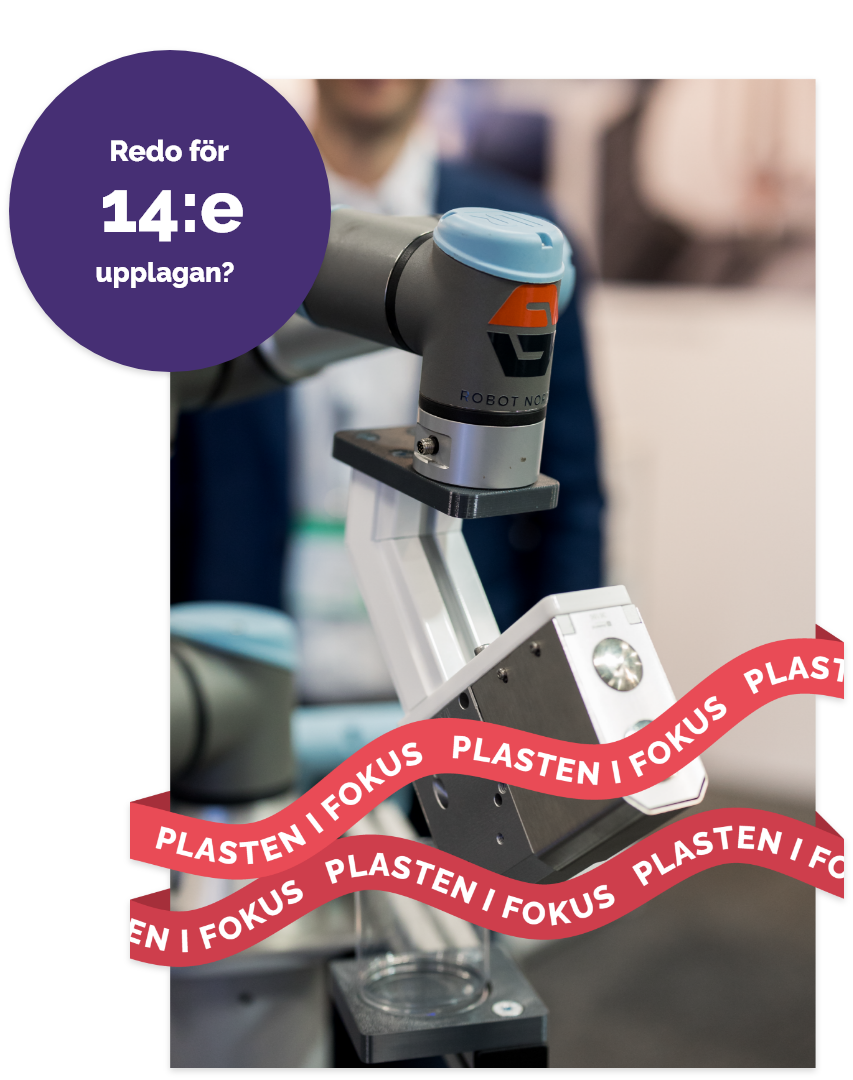

With focus on the plastics
Plastteknik Nordics was launched in 2005 in response to a clear desire within the industry: the need to meet. Every two years, we bring the plastics industry together in Malmö, creating a Nordic meeting place where visitors and exhibitors from various countries can forge connections, exchange knowledge, and discover new opportunities.
The trade fair is organized by Easyfairs, which means we are also part of a broader European network, alongside plastics events such as KPA-Messe and KUTENO.
Plastteknik Nordics
Mission, Vision & Values
Mission
Plastteknik Nordic brings together people, knowledge, and solutions through an event where industry players can discover new technology, generate business, and take the next step toward more resource-efficient use of plastics.
Vision
To be the Nordic region’s most important meeting place for a plastics industry that unites technical development, circularity, and competitiveness.
Values
A close-knit community: Together, we shape the future of the plastics industry.
Collaboration: We build bridges across the entire value chain.
Destination: We champion ideas and technology that drive the industry forward.
To be a part of Plastteknik Nordic
Here, you will meet decision-makers and buyers who are looking for new solutions and collaborations. The trade fair offers a platform to strengthen your brand and expand your network. Furthermore, you will have the opportunity to participate in discussions regarding industry developments and sustainability challenges.
Sustainability
Easyfairs Nordic AB has long worked systematically on environmental and sustainability issues and has been certified under Svensk Miljöbas since January 2023. At Plastteknik Nordic, sustainability is woven throughout the seminar program, the offerings from exhibitors, and our own work as organizers.
How is plastic made?
Plastic manufacturing is a complex process that involves several stages from raw materials to finished product. Here is an overview of the main steps in plastic development:

Preparing
The plastic manufacturing chain begins with preparatory steps where the raw material is processed to ensure it is ready for further production. This includes blending different types of plastics, size reduction through shredding, crushing, and grinding, as well as screening and classifying the material to achieve the correct specifications. These processes ensure that the plastic is in optimal form for the next stage molding.

Forming
After the preparatory stage comes molding, where the plastic is transformed into the desired shapes and structures. This can be done through conventional methods such as injection molding, extrusion, blow molding, and thermoforming, or through additive methods like 3D printing. In injection molding, the plastic is melted and injected into molds, while extrusion involves forcing melted plastic through a die to create continuous products such as pipes or profiles.

Machining
Once the plastic products have been molded, they may require further processing to achieve their final specifications. Processing methods such as cutting, punching, milling, and bending are used to adjust and refine the molded plastic parts. These steps are crucial to ensure that the parts meet precise dimensions and quality standards.

Joining/Bonding
To create complex products, different plastic components may need to be joined. Joining techniques include welding, where heat is used to melt and bond parts together, as well as gluing and riveting. These methods make it possible to create strong and durable assemblies of plastic parts.

Additive Manufacturing
Additive manufacturing, often called 3D printing, is revolutionizing plastic production by enabling the creation of complex shapes and structures directly from digital models. The material is built up layer by layer, allowing great design freedom and efficient production of prototypes and custom-made parts.

Surface Engineering
Surface treatments enhance both the appearance and functionality of plastic products. Processes such as printing, labeling, embossing, laminating, and coating are used to apply color, texture, or other functional surface layers. These treatments can improve the product’s aesthetic value, durability, and performance.
In summary, from the preliminary treatment of materials to advanced surface treatments, the plastic manufacturing chain includes a range of critical processes that together enable the production of high-quality plastic products for a variety of applications.
Subscribe to our newsletter to receive updates about the event.
By subscribing, I agree to receive promotions from Plastteknik in accordance with our privacy policy.